

How to Stop Comparing Yourself to Other Moms
Disclosure: Some of the links in this post are affiliate links. This means if you click on the link and purchase an item, I will receive an affiliate commission at no extra cost to you.
It usually starts with a completely harmless scroll. You open an app during a rare five-minute break and see a beautifully lit video of a mother serving a homemade organic breakfast before a seamless, joy-filled school drop-off.
Everyone in the frame is smiling. Nobody is running late. Nobody has toothpaste on their shirt or a missing shoe.
Then you look at your own morning. Lukewarm coffee you have already reheated twice. A tearful argument over sock seams. A frantic search for a crumpled permission slip. And a heavy dose of frustration before 8am.
Learning how to stop comparing yourself to other moms is one of the most liberating things you can do for your mental health, your confidence, and your enjoyment of your own life.
This post gives you practical, honest, and deeply human ways to do exactly that.

Why the Comparison Trap Feels So Real
The comparison trap is not a personal weakness. It is a very human response to a digital environment that was never designed with your mental health in mind.
What you are scrolling past is not real life. It is a performance. It is one carefully selected second from someone’s 24-hour day, lit well, edited thoughtfully, and posted at the moment that made the cut.
You never see what happened three minutes before the photo, or the mess just outside the camera frame. You don’t see the financial stress, the marriage tension, or the anxiety hiding behind that perfect smile.
The comparison trap is one of the quietest and most exhausting parts of modern motherhood. It steals your joy, fuels mom guilt, and leaves you feeling like you are always falling short, no matter how hard you work or how much love you pour into your home.
The comparison trap and the social media myth are deeply connected. Our post on The Biggest Soft Life Lie Social Media Keeps Telling Moms unpacks exactly why
What You Are Actually Competing Against
Here is the truth that changes everything. You are not competing against real moms living real lives in real time. You are competing against highlight reels, selective editing, and a digital performance designed specifically to hide the mess.
The standard you are holding yourself to does not exist in real life. It exists on a screen. And a screen is not a fair judge of anything.
Your kids do not need a picture-perfect mom. They need a present, grounded, emotionally available mom who knows she is exactly the right person for the job of raising them. Keep that truth close. We will come back to it throughout this post.
Stepping out of the comparison trap is one of the first real steps toward the soft life. Our post on What Does Soft Life Really Mean for Stay-at-Home Moms? explains why.

Unmasking the Illusion of External Perfection
The reason we fall into the comparison trap so easily is that we compare our messy behind-the-scenes reality to someone else’s polished front-facing highlights.
To build immunity to this, we have to learn to see through the illusion first.
Identify and mute your specific comparison triggers.
Comparison rarely happens randomly. It has specific, predictable entry points. Take an honest audit of what makes you feel inadequate.
If a particular account consistently leaves you feeling like a failure, use the mute or unfollow button. Protecting your mental peace is more important than staying polite online.

Separate a mom’s surface aesthetic from her internal reality.
A perfectly dressed mom with an immaculate car does not automatically have a peaceful mind. Appearance is often a shield for deep internal chaos.
When you realize that a clean exterior does not equal a happy life, you stop assigning magical perfection to women who are simply presenting well.
Remember that every family has a hidden battle.
No household is exempt from struggle. The family that appears to have everything might be quietly managing a medical crisis.
The mom whose children excel academically might be struggling to connect with them emotionally. When you understand that everyone is carrying something heavy, envy softens naturally into empathy.

Stop romanticizing previous generations of motherhood.
We sometimes compare ourselves not just to other moms but to our own mothers and grandmothers, romanticizing the past as simpler and better.
We forget that previous generations faced enormous systemic challenges, lacked modern parenting resources, and often suppressed their mental health under intense societal shame.
You are parenting in a completely unique digital age. Give yourself credit for navigating new terrain.
Several of the beliefs feeding the comparison trap come from old stories we inherited. Our post on The Annoying Beliefs That Keep Moms Playing Small names them clearly
Letting go of comparison often starts with letting go of things tied to old, aspirational versions of yourself. Our post on Why Comparison Is Stealing Your Joy
Building Confidence From the Inside Out
When we constantly look outward to judge how we are doing, we operate from a place of emotional scarcity.
To break this cycle, we need to build an internal anchor of confidence that does not depend on external validation or neighborhood approval.

Discover and celebrate your unique parenting strengths.
Motherhood is not a standardized test with a single grading rubric. Your children were given to you because your specific personality, your patience, and your perspective are exactly what they need to thrive.
Maybe you are not the mom who does elaborate crafts. Maybe you are the mom who reads bedtime stories with hilarious voices, makes the best comfort food, or stays calm during a meltdown.
Own that version of yourself completely.
Keep a personal done list of your daily wins.
We are biologically wired to remember our failures and discount our successes. To fight this, keep a running list of your daily parenting wins.
Did you validate a tantrum instead of yelling, make sure everyone ate something nutritious? Did you show up even on a hard day?
Write it down. Seeing physical proof of your goodness makes it impossible to believe the lie that you are failing.

Define your own core family values with real clarity.
Comparison thrives when you do not know what your own goals actually are. Sit down and write the three values that matter most to your household. Is it rest, creativity, and connection?
Then why are you comparing yourself to a mom whose values are clearly achievement and structured activities? When your own path is clearly defined, what others are doing on their path becomes largely irrelevant.
Give yourself full permission to be a good enough mother.
The pediatrician Donald Winnicott coined the term “the good enough mother.”
He found that children actually thrive more when their mothers are human and imperfect, because it teaches children to navigate disappointment and reality safely.
Aiming for perfection is a disservice to your children. Aim for consistency, safety, and love instead.

Use envy as a map for your own unfulfilled desires.
When you feel that uncomfortable sting of comparison, do not let it turn into self-pity. Instead, ask yourself what the envy is trying to tell you.
If you envy a mom who takes solo trips, your soul is asking for a break. If you envy a mom who is highly organized, you desire more structure.
Use their life as a mirror to clarify your own needs rather than a measuring stick for your worth.
The above 5 ideas connect directly to the mindset work we do in our post on How to Stop Feeling Like You’re Failing and Start Winning in Life.
Building something of your own outside of caretaking is one of the most powerful antidotes to comparison. Our post on Passive Income Ideas for Stay-at-Home Moms can help you find your direction.
Rebuilding Your Social Environment
The people we surround ourselves with have a massive impact on our inner narrative. If your daily social environment is competitive, it will be nearly impossible to maintain self-compassion.
We need to build circles that promote safety, vulnerability, and genuine support.

Shift from competition to community.
When we view other mothers as competitors, we alienate ourselves from the exact people who understand our struggles best.
The mom who seems to have a spotless house might be desperately lonely and looking for real connection just like you.
Drop your guard first. When you lead with honesty, you give others permission to do the same.
Build friendships with moms in different life stages.
If all your close friends have kids the same age, the temptation to compare milestones and choices is constant.
Try to find friends who are a few steps ahead or behind you in the journey. Older moms offer long-term perspective and remind you that this hard phase passes.
Younger moms allow you to step into a mentorship role, which naturally builds your confidence.

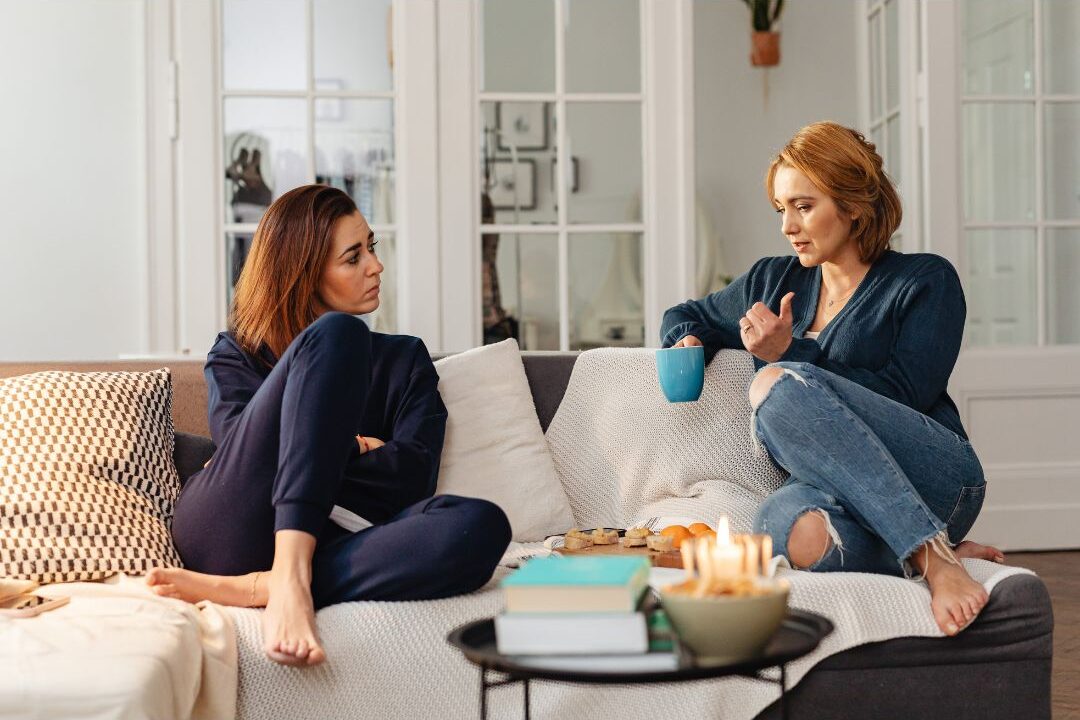
Practice transparency in your everyday conversations.
The next time someone asks how you are doing, try being honest instead of defaulting to “I’m good, just busy.”
Try saying: “We are having a really hard week with bedtime,” or “I am feeling a bit overwhelmed today.”
This kind of transparency instantly dissolves competitive energy and opens the door to genuine connection.
Set boundaries around toxic bragging circles.
There is a clear difference between a mom sharing a genuine celebration and a mom using her child’s achievements to establish social dominance.
If you belong to a group where the primary currency is one-upmanship, remove yourself from that environment gently but firmly. Your peace is worth more than social compliance.
Let your home honor your real family, not a magazine standard.
Your home should be a soft landing pad for your actual family, not a showroom designed to impress.
If you are constantly trying to maintain a pristine standard that does not match your children’s current developmental stage, you will live in a state of constant anxiety.
Choose functional over flawless and give yourself permission to have a truly lived-in home.
A home that honors your real life is the foundation of what we explore in How to Create a Calm Home Environment.
Setting clear household boundaries reduces the internal pressure to perform. Read more in our post on Simple Household Rules That Eliminate Daily Stress.
Rewriting the Story You Tell Yourself
True freedom from the comparison trap requires a cognitive shift. You have to actively train your brain to stop running old patterns of inadequacy and start measuring your worth against a completely different, internal standard.

Measure your progress only against your own past
The only fair standard of comparison available to you is your personal history. Are you more emotionally regulated than you were a year ago?
Is your bond with your children growing deeper? Every family operates with completely different resources, temperaments, and support systems. Comparing your progress to someone else’s is entirely illogical.
Start a morning gratitude ritual for your current life.
Comparison cannot survive in a mind filled with active, intentional gratitude. Before you check your phone each morning, write down three specific things you love about your current life.
It might be the way your toddler mispronounces a word or the quiet of your kitchen at dawn. Force your brain to see your own abundance before it sees anyone else’s.

Practice self-compassion during your lowest moments.
When you are exhausted or emotionally drained, your brain becomes highly susceptible to feelings of failure. When you catch yourself thinking “I am a terrible mother,” stop and reframe.
Tell yourself: “I am a good mother having a hard moment.” Treat yourself with the same tenderness you would offer your best friend on her worst day.
Dismantle the myth of the perfect mother.
The cultural image of the perfect mother, sacrificial, always smiling, completely unruffled, is a fabricated ideal that no human being can achieve.
It was never real. When you recognize that the standard itself is impossible by design, you stop feeling guilty for failing to meet it. You were never supposed to meet it. Nobody was.

Remember that your children are not grading you.
Your children do not care if their birthday cake came from a box or a bakery. They do not care if their outfits are new or secondhand.
What they will remember is how they felt in your presence. Did they feel safe, seen? Did they feel loved? Keep your eyes on that standard because it is the only one that actually matters.
Rewriting the internal script is central to the habits we explore in Things Mentally Strong Moms Do Differently That Others Overlook.
If talking kindly to yourself still feels difficult, our post on 50 Positive Affirmations for Stay-at-Home Mom gives you the exact words to start with.
Deeper Shifts for Lasting Peace
To ensure that comparison does not creep back during high-stress seasons, you need foundational lifestyle shifts that protect your long-term emotional wellbeing.
These final three ideas are not quick fixes. They are the deeper work.

Anchor your self-worth outside of your maternal role.
If your entire identity is tied to how your children behave or perform, you will inevitably become anxious and competitive. You were a whole, interesting, valuable person before you had children.
Reconnect with old interests. Read something that has nothing to do with parenting. Maintain an inner life that belongs entirely to you.
Learn to celebrate other moms without doubting yourself.
When a friend shares a parenting win, notice if your immediate reaction is defensiveness.
Practice training your mind to think: “That is wonderful for her, and it has absolutely nothing to do with my worth.”
Another woman’s light does not dim yours. There is room for all of us to succeed at this.

Build a personal mantra for moments of comparison panic.
When that wave of comparison hits at the school gate or while scrolling your feed, you need a reliable internal reset. Create a simple mantra you can repeat quietly.
Something like “different families, different strengths, same love” or “I am exactly the mother my children need.” Repeat it until your heart rate slows and you return to yourself.
These three deeper shifts connect to everything we explore in our post on Why Comparison Is Stealing Your Joy, which goes even further into the root causes.
Honoring the Season of Motherhood You Are Actually In
Your vulnerability to comparison changes depending on where you are in the motherhood journey.
A postpartum mom running on two hours of sleep is far more susceptible than a mom whose children are largely independent. Understanding your current season helps you give yourself the right kind of grace.

In the baby years, the comparison tends to center on milestone speeds, sleep training, and postpartum body recovery. The healthy alternative is focusing on physical healing, slow bonding, and rest over productivity.
In the toddler years, comparison shifts to behavioral perfection in public and speech development. The healthy focus is emotional regulation, consistent boundaries, and keeping everyone safe.
In the school years, comparison moves to extracurricular achievements and academic performance. The healthy focus is protecting unstructured play, discovering individual interests, and deep family connection.
In the teenage years, comparison centers on independence milestones and social status. The healthy focus is open communication, building trust, and maintaining your own personal boundaries as a parent.

Be incredibly gentle with yourself in high-stress, low-energy seasons. Your capacity is naturally limited at certain points in this journey, and that is exactly how it is supposed to be. A temporary hard phase does not make you a permanent failure.
Managing your capacity wisely in the young kids season is something we address practically in Productivity Tips for Moms with Young Kids.
Seasons of high comparison vulnerability often overlap with seasons of burnout. Our post on 10 Warning Signs You’re Headed for Mom Burnout is worth reading alongside this one.
CONCLUSION
Learning how to stop comparing yourself to other moms is a daily, intentional practice. It will not happen overnight.
You will still feel that uncomfortable sting of comparison from time to time when you scroll your feed, attend a school function, or chat at the park.
But every single time you choose to look away from someone else’s highlight reel and back at your own life with clear eyes and genuine kindness, you break the cycle a little more.
You are the exact mother your children need, with your specific flaws, your particular strengths, your real limitations, and your irreplaceable love.
Close the app. Take a breath. Look at the beautiful, real life you are building right in front of you. It has always been more than enough.
You May Also Like:





2 Comments